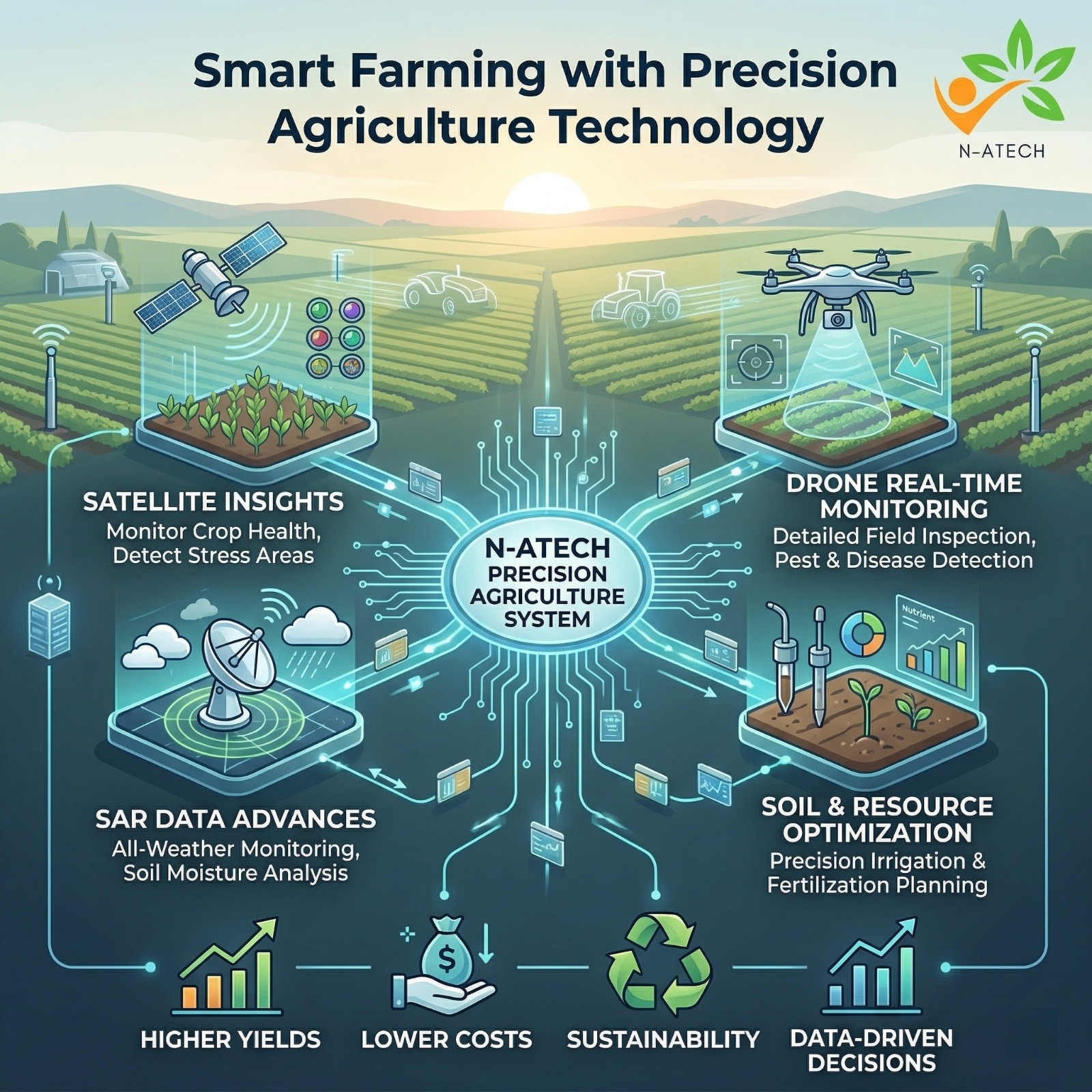



Agriculture is evolving rapidly with the integration of advanced technologies. Traditional farming methods are no longer sufficient to meet the growing demand for efficiency, sustainability, and higher yields.
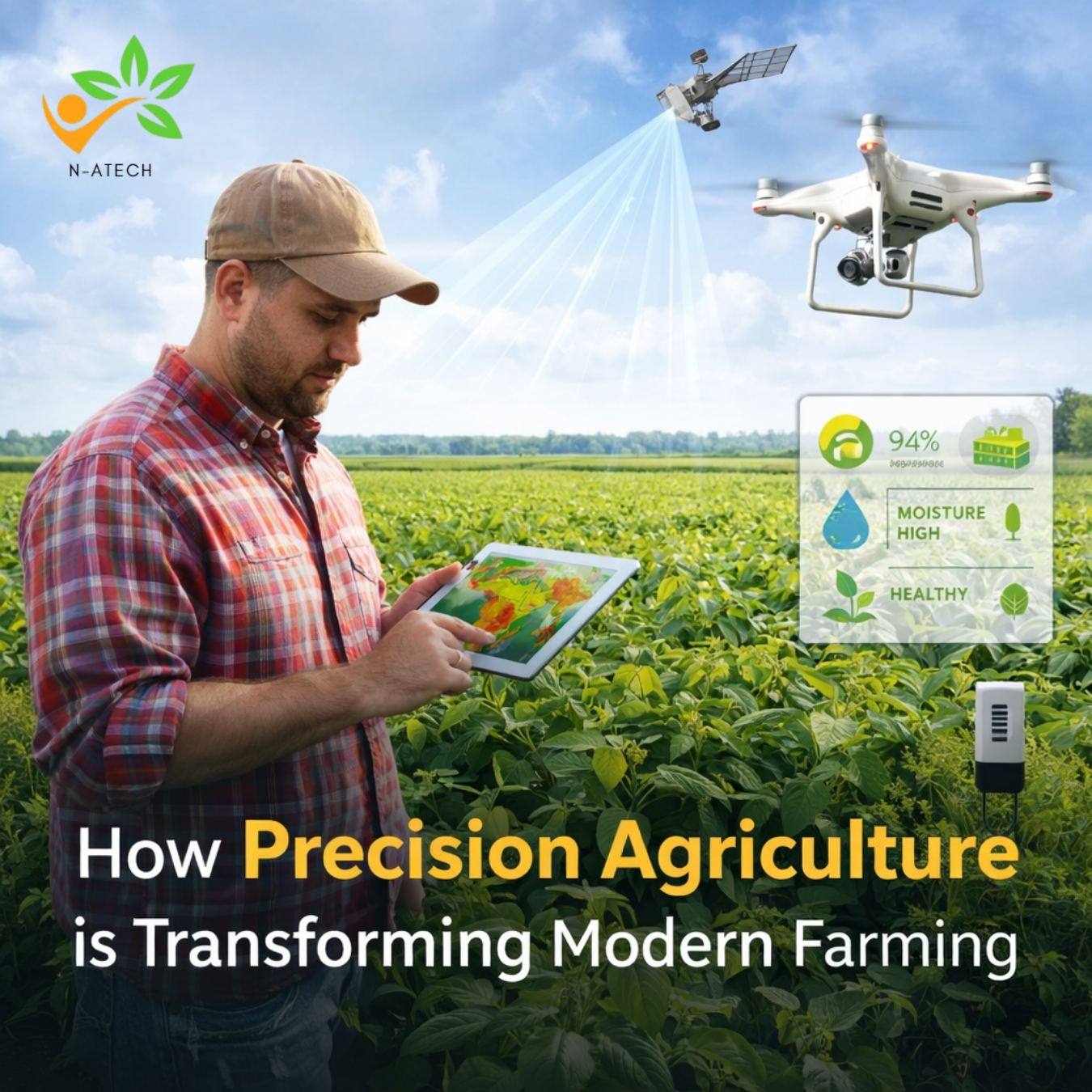
Precision agriculture is transforming the industry by using data-driven insights and modern technologies to optimize farming operations. Companies like N-A Tech are leading this transformation by helping farmers make smarter and more informed decisions.
What is Precision Agriculture
Precision agriculture is a farming approach that uses technology and data analysis to monitor and manage crops more efficiently.
It involves collecting real-time data from multiple sources and using it to improve:
-
Crop health monitoring
-
Irrigation management
-
Fertilization strategies
-
Yield optimization
This ensures that every resource is used effectively, reducing waste and increasing productivity.
The Role of Satellite Imagery in Farming
Satellite imagery provides a powerful way to monitor large agricultural areas.
With multi-spectral data, farmers can:
-
Track crop health and vegetation growth
-
Detect early signs of pests and diseases
-
Identify stressed areas in fields
These insights allow timely action, preventing crop loss and improving overall yield.
Advanced Insights with SAR Data
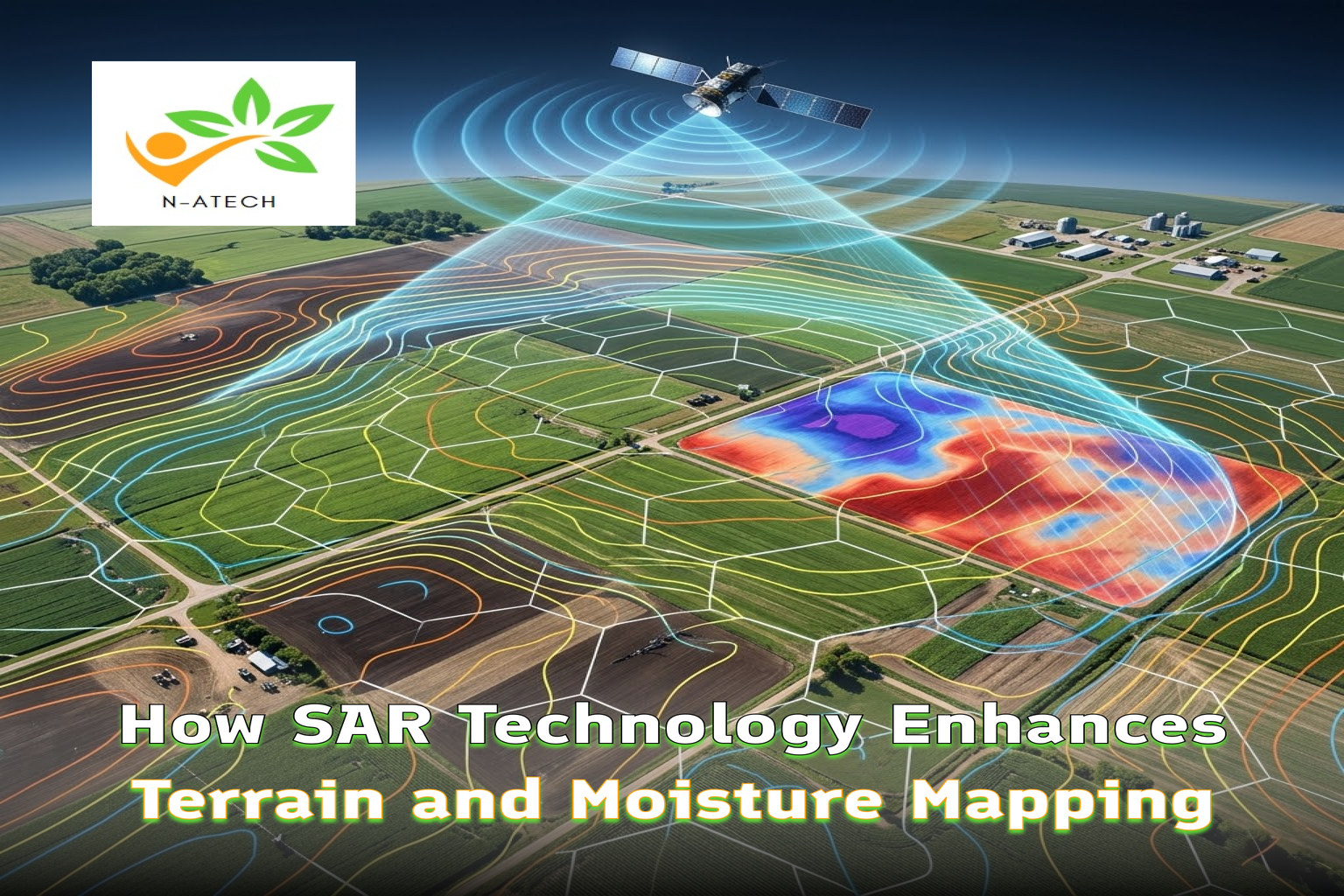
Synthetic-Aperture Radar (SAR) technology adds another layer of precision to agricultural analysis.
Unlike traditional imaging, SAR can:
-
Penetrate clouds and work in all weather conditions
-
Provide accurate terrain mapping
-
Measure soil moisture levels
-
Detect land displacement and subsidence
This makes it a highly reliable tool for continuous monitoring and planning.
Importance of Soil Data and Moisture Analysis
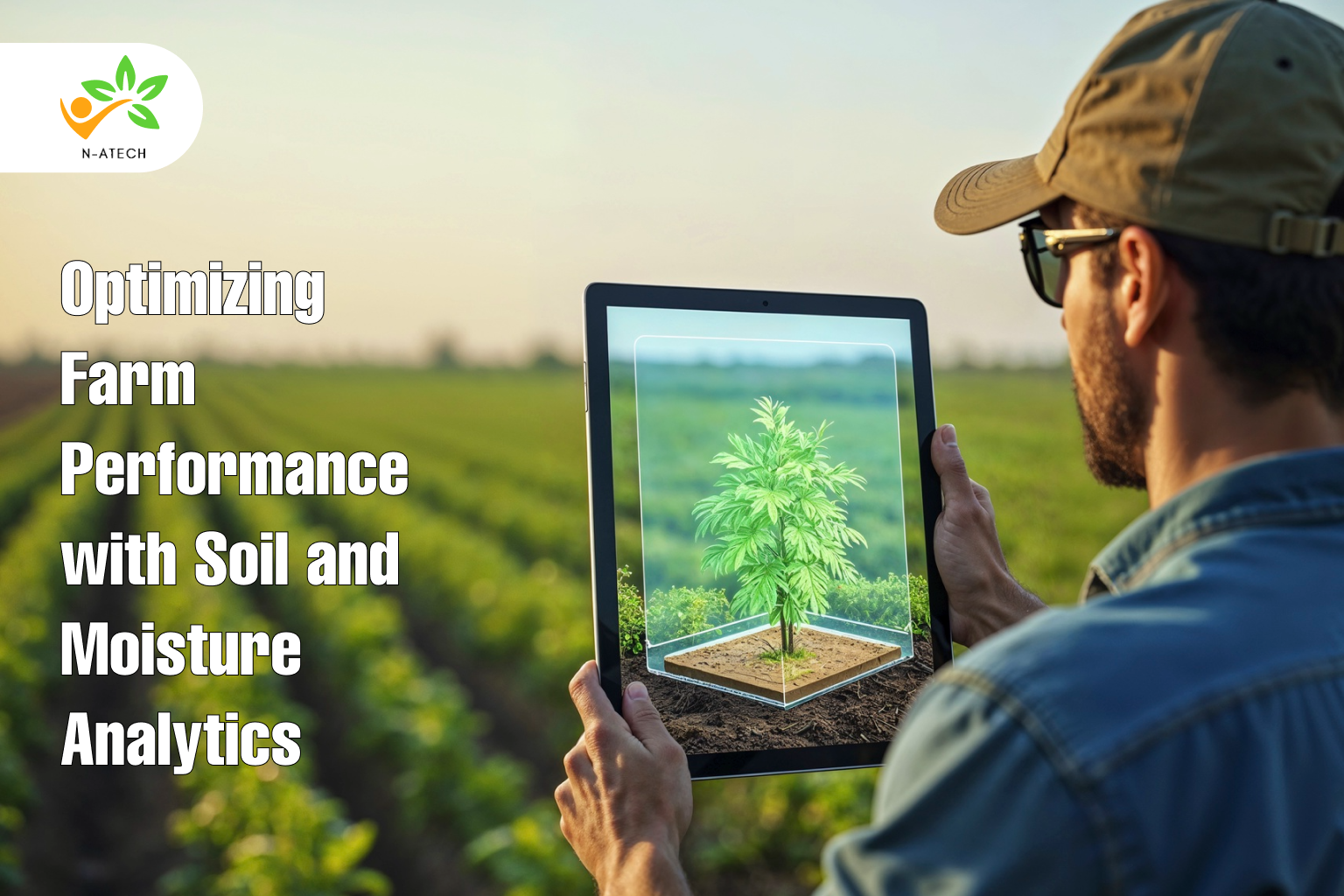
Soil health plays a critical role in crop productivity.
Through advanced soil analysis, farmers can understand:
-
Soil composition and nutrients
-
Moisture levels and retention capacity
-
Irrigation requirements
This helps in making informed decisions about watering, fertilization, and land management, leading to better crop growth and sustainability.
Drone Imaging for Real-Time Field Monitoring
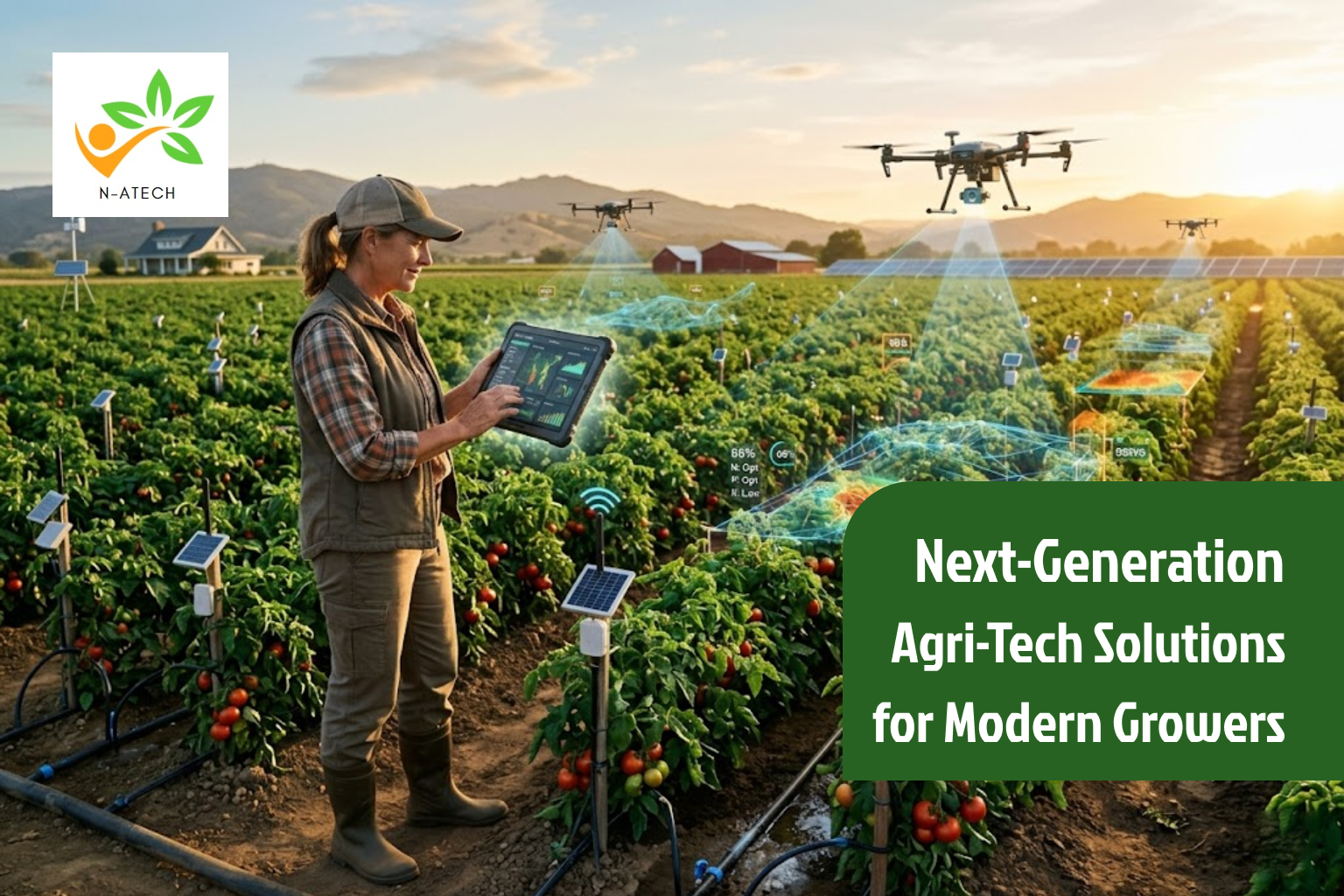
Drone technology is revolutionizing how farmers monitor their fields.
With high-resolution drone imagery, farmers can:
-
Conduct detailed crop inspections
-
Identify problem areas quickly
-
Generate accurate field maps
-
Monitor large areas efficiently
This real-time data enables faster decision-making and improves operational efficiency.
Benefits of Precision Agriculture
Adopting precision agriculture technologies offers several advantages:
-
Increased crop yield and productivity
-
Reduced resource wastage
-
Improved decision-making with real-time data
-
Lower operational costs
-
Enhanced sustainability and environmental protection
Farmers can achieve better results while minimizing risks and inefficiencies.
Data-Driven Farming for the Future
Modern agriculture is shifting toward a data-first approach.
With integrated technologies, farmers can:
-
Analyze trends and predict outcomes
-
Plan seasonal strategies more effectively
-
Optimize resource allocation
-
Improve long-term farm management
This creates a more resilient and future-ready agricultural system.
Why Technology is Essential in Modern Farming
With climate change, unpredictable weather, and increasing global demand, agriculture needs smarter solutions.
Technology helps farmers:
-
Adapt to changing conditions
-
Improve efficiency
-
Ensure consistent production
Precision agriculture is not just an innovation — it is becoming a necessity for sustainable farming.
Conclusion
Precision agriculture is transforming the future of farming by combining technology, data, and innovation.
With tools like satellite imagery, SAR data, soil analysis, and drone imaging, farmers can make better decisions, improve productivity, and reduce waste.
As the agricultural industry continues to evolve, adopting smart technologies will be key to achieving long-term success and sustainability.

Leave a reply